The European crypto market has reached one of the most significant milestones in its history. With the end of MiCA's transitional period, a new era has officially begun—one in which innovation alone is no longer sufficient. Long-term success will be defined by regulatory compliance, transparency, and trust.
Major economic turning points rarely arrive with great fanfare. By the time most people recognize them, they have already reshaped the market. That is exactly what is happening today across Europe's fintech and crypto sectors.
Over the past decade, the industry has been driven primarily by technological innovation. Blockchain solutions, tokenization, decentralized finance, and increasingly sophisticated digital services have evolved rapidly, while regulation often struggled to keep pace. As a result, users frequently found it difficult to distinguish between providers operating within sustainable, transparent frameworks and those simply taking advantage of regulatory uncertainty.
That era has now come to an end.
MiCA Is Not a Barrier - It Is a Quality Threshold
The Markets in Crypto-Assets Regulation (MiCA) was not designed to slow innovation. Its purpose is to provide a secure, transparent, and harmonized regulatory framework for crypto services across the European Union.
As of 1 July 2026, crypto-asset service providers that do not hold the required MiCA authorization—or are not covered by a clearly defined transitional regime—can no longer provide services within the European Union. At first glance, this may appear to be simply another regulatory update. In reality, it represents a fundamental market shift.
The key question is no longer who can launch products fastest or grow the quickest. Instead, success depends on who can meet the regulatory standards that ensure long-term customer protection, operational transparency, and financial stability. In many ways, MiCA establishes an entirely new quality benchmark for the European crypto market.
The Market Is Not Disappearing, It Is Maturing
Regulation is often perceived as a limitation. Yet what we are witnessing today is better described as a natural market filter. Some companies that failed—or chose not—to meet the new requirements are leaving the market. Others are actively seeking partnerships with licensed providers. Meanwhile, organizations that prepared in time can continue operating within a more stable and predictable regulatory environment.
This is not the end of Europe's crypto industry. On the contrary, it marks the beginning of a more mature, transparent, and professional ecosystem—one in which innovation and regulation no longer compete against each other but instead reinforce one another.
Compliance Has Become a Competitive Advantage
In this new environment, companies that prepared early gain a significant strategic advantage. In December 2025, BlockBen obtained its MiCA authorization from the Latvijas Banka, becoming the first licensed crypto-asset service provider in Latvia under the new European framework.
This represents far more than an administrative milestone. While many market participants were still trying to understand and navigate the new regulatory landscape, BlockBen had already transitioned to a fully regulated European operating model, allowing the company to continue building its services with long-term certainty.
As Attila Krocsek, CEO of BlockBen, explains:
"Obtaining the MiCA licence was not only a professional achievement for BlockBen—it was the result of years of consistent and dedicated work."
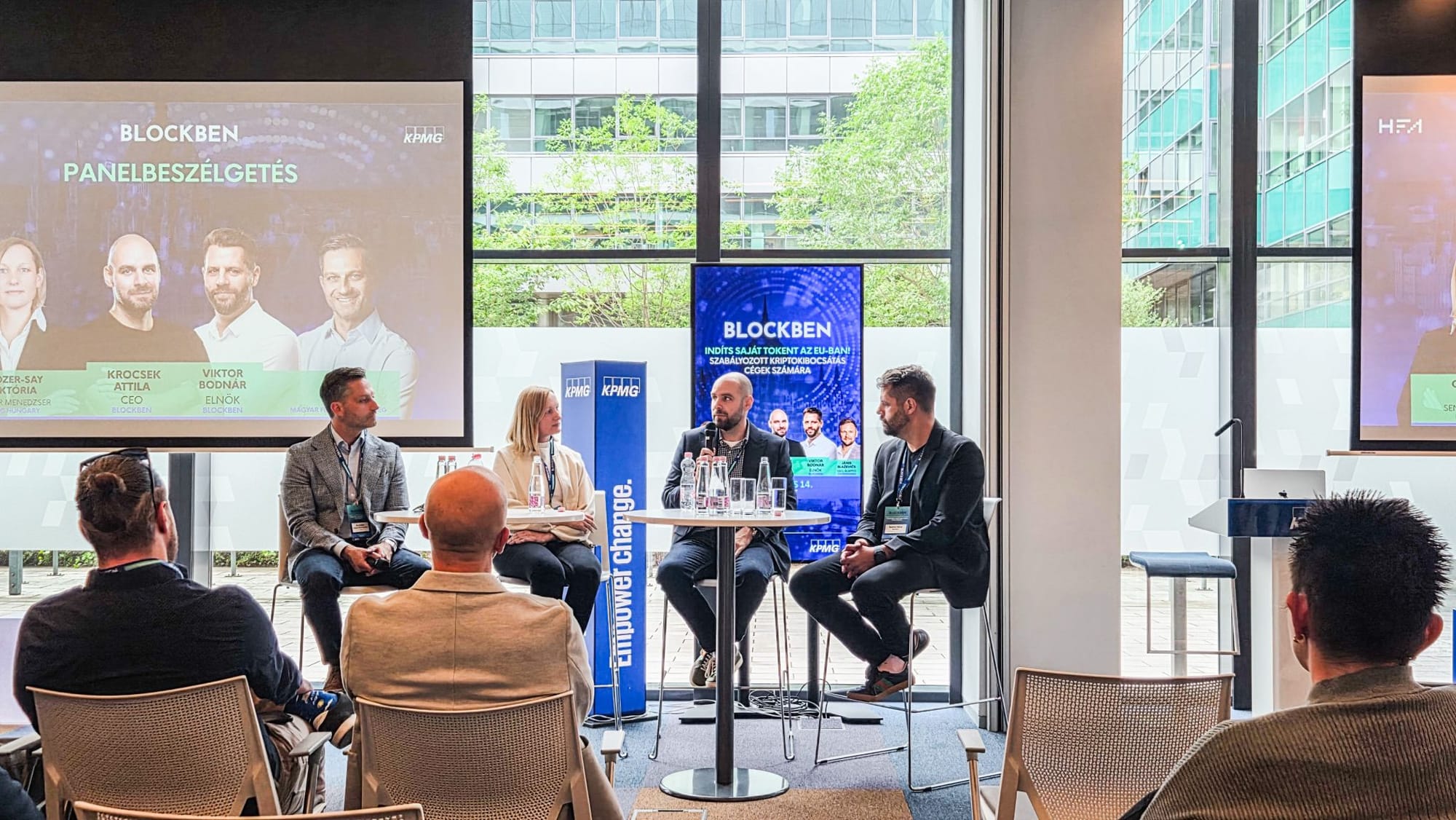
His words highlight an important reality. Long-term value is never created overnight. Genuine trust is built through strategic thinking, consistent execution, and continuous compliance.
Only a few years ago, fintech success stories were primarily about startups, rapid growth, and disruptive innovation. Today, however, the European market is evolving toward something different. The continent's digital financial ecosystem is increasingly built on collaboration, regulatory oversight, resilient infrastructure, and sustainable business models.
The winners of the coming years are unlikely to be the companies with the loudest marketing campaigns. Instead, they will be those capable of delivering secure, transparent, and fully compliant financial services over the long term.
A New Definition of Innovation
In post-MiCA Europe, the meaning of innovation itself is changing. Success will no longer be measured by who can avoid regulation, but by who can transform regulatory compliance into a genuine competitive advantage. This mindset separates companies that create lasting value from those that merely chase short-term market opportunities.
For BlockBen, obtaining a MiCA licence is therefore not the conclusion of a journey—it is the beginning of a new chapter. A chapter focused on building a European digital financial infrastructure where innovation, compliance, and trust work together to shape the future of fintech. Because crypto in Europe is not coming to an end.
It is finally entering its next stage of maturity.
Quick Guide
What is fintech?
Fintech is the intersection of financial services and technological innovation. It encompasses solutions designed to make financial processes faster, simpler, and more efficient.
What is MiCA?
The Markets in Crypto-Assets Regulation (MiCA) is the European Union's comprehensive regulatory framework for crypto-assets. Its objective is to create a more transparent, harmonized, and secure environment for both crypto-asset issuance and crypto-related services.
What is a CASP?
A Crypto-Asset Service Provider (CASP) is a licensed company authorized to provide crypto-related services, including custody, exchange, transfer, and the placement of crypto-assets within the framework established by MiCA.
Why is licensing important?
In the post-MiCA market, a licence is far more than a legal requirement. It is one of the fundamental pillars of regulatory compliance, customer protection, and long-term trust.
What makes an innovation successful?
Not simply being new. True innovation solves real-world problems, operates within a regulated framework, and creates sustainable long-term value.
